5 Incredible Benefits of Deep Massage Therapy
Jun 28, 2025
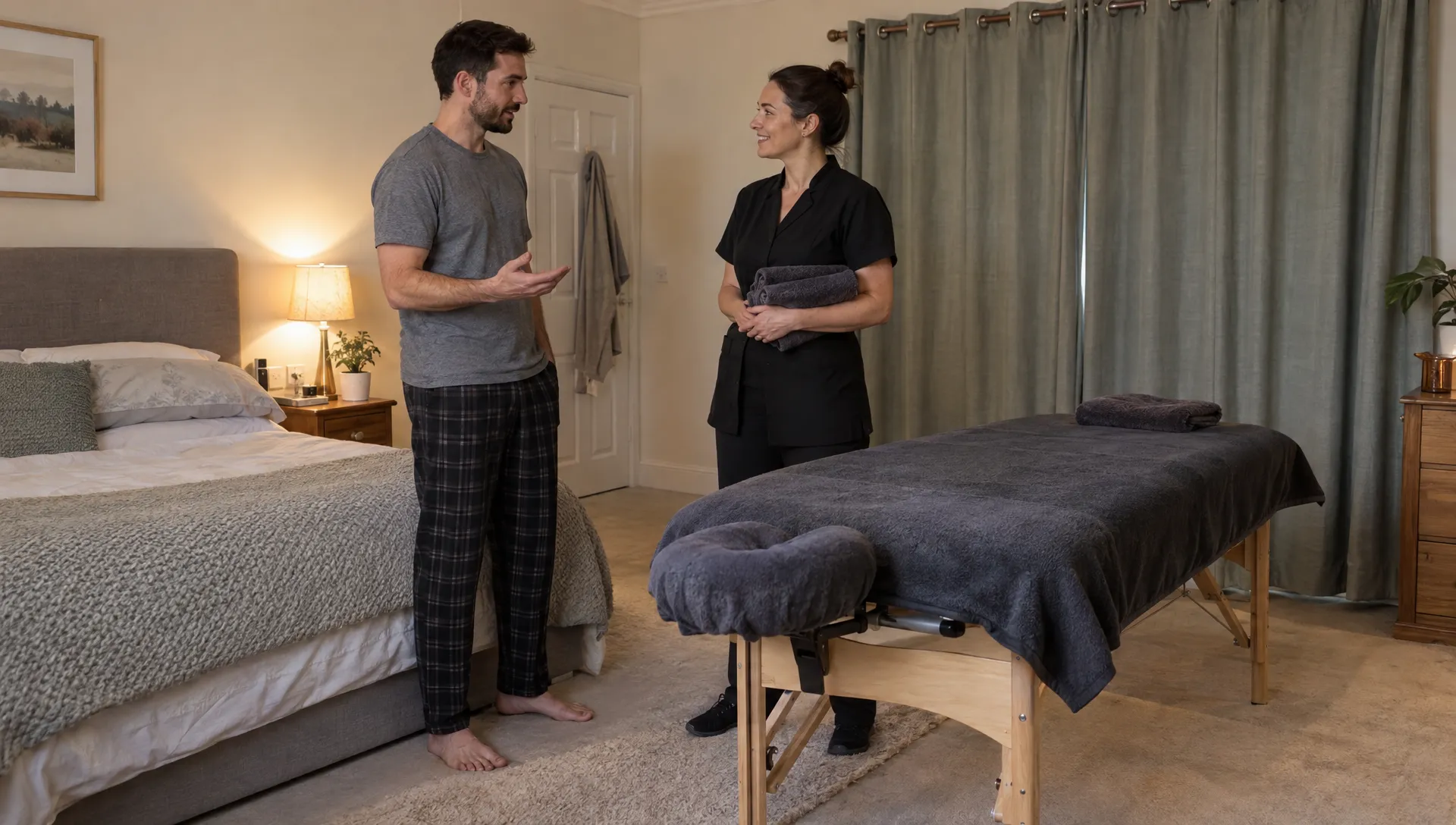
Preparing your home for massage therapy does not mean turning your living room into a spa. A clear working area, comfortable warmth and a little privacy matter far more than candles or special towels.
The aim is to let your therapist work safely while you settle in without interruptions. You do not need to deep-clean the whole flat or buy equipment before you know what is required. Focus on the room you will use, the route into it and a few practical details to confirm before the appointment.
Pick a room where you can close the door or minimise people passing through. A bedroom or living room can work, provided there is enough usable floor space. Move coffee tables, laundry baskets and loose cables out of the working area rather than pushing everything against the treatment space.
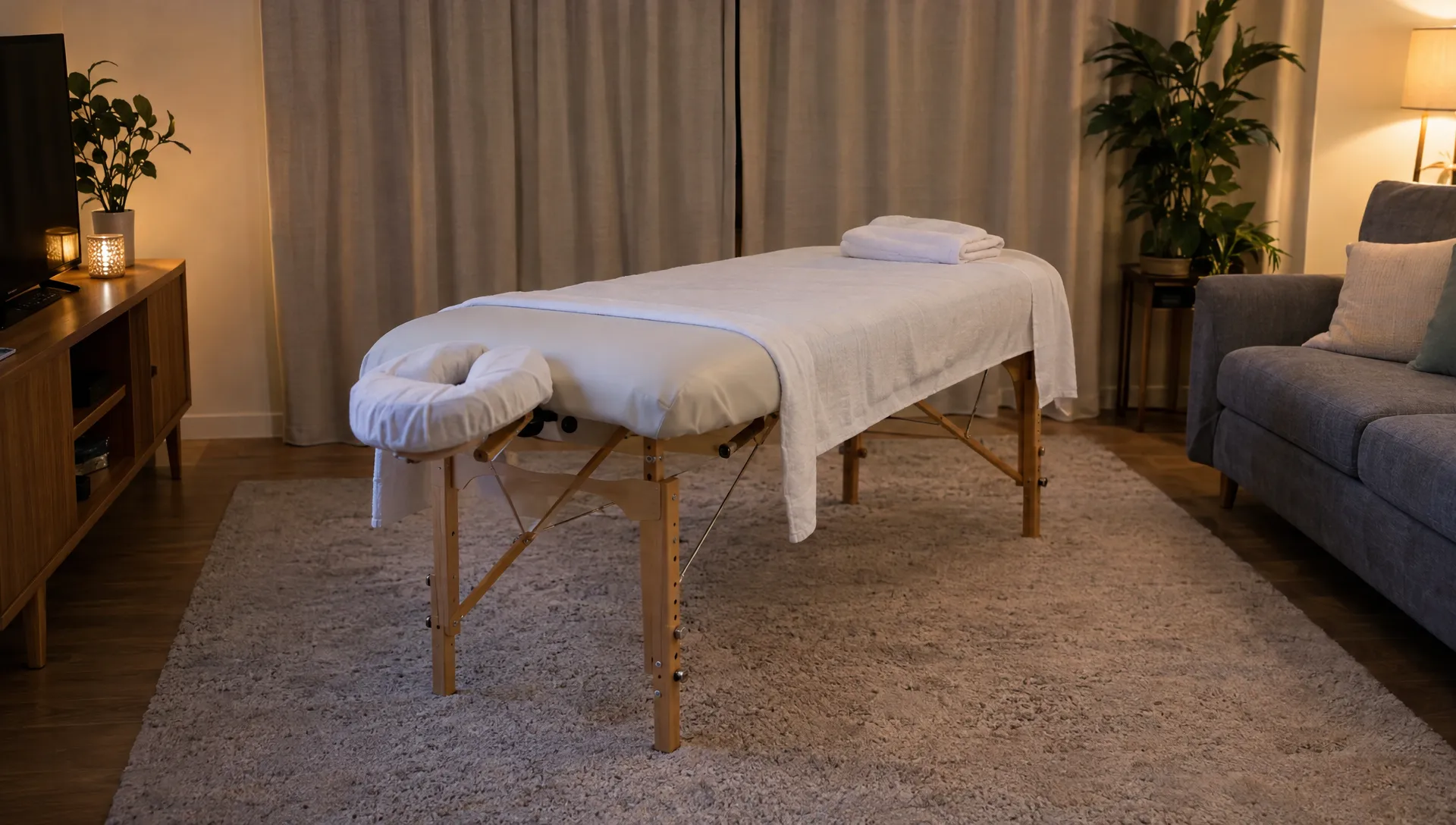
For a table-based appointment, the therapist needs room to move around the table, not simply enough space to unfold it. If your room is compact, measure the available area and ask your provider whether it is suitable. Avoid buying or rearranging furniture based on a guessed minimum size.
Check the route from your front door as well. Narrow hallways, awkward stairs and furniture near the entrance can make carrying equipment difficult. Let the provider know about upper-floor access and whether there is a working lift.
The best room for massage therapy is usually the one with the easiest access and fewest interruptions, rather than the one that looks most relaxing. There is no need to tidy rooms your therapist will not enter.
Ask what your therapist will bring and what, if anything, you need to provide. Useful details to confirm include the treatment table or mat, clean linen, towels, oils and any positioning supports. Do not assume every mobile service or treatment has the same setup.
Your choice of treatment can affect the space and clothing needed. For example, a traditional Thai session may use a different arrangement from an oil-based massage. Check the description of your chosen option in Lifeforce’s range of mobile massage treatments, then confirm any preparation instructions when booking.
If you are asked to provide towels or sheets, have them clean, dry and ready nearby. Keep a clear surface available for small items, but avoid preparing oils or heating products unless your therapist has specifically requested them. A bed or sofa is not automatically a suitable replacement for professional treatment equipment.
Warm the room before your therapist arrives, especially if it normally feels chilly when you sit still. Aim for a temperature that feels comfortable without several layers of clothing. You can adjust it during the session, so keep heating controls accessible and mention if you tend to feel cold.
Soft lighting is optional. There should still be enough light for your therapist to set up, move safely and carry out the treatment. Close curtains or blinds where neighbouring windows overlook the room, particularly in ground-floor flats.
Fresh air is helpful if the room feels stuffy, but avoid leaving a cold draught across the treatment area. Strong room sprays, incense and essential-oil diffusers are unnecessary and may aggravate fragrance sensitivities. Tell your therapist about any known reactions to oils or skincare products in advance.
Music is also a preference, not a requirement. If you want it, choose something quiet enough that you can speak comfortably. Skip open-flame candles around linen and equipment. A bedside lamp is a simpler way to soften the room without introducing a fire risk.
Before massage therapy, aim to feel comfortable rather than following a complicated preparation routine. Eat normally, but consider leaving some time after a large meal if lying down straight afterwards makes you uncomfortable. Drink as you normally would; there is no need to force extra water or follow a “detox” routine.
Wear something easy to change out of and have comfortable clothing ready for afterwards. For treatments performed through clothing, ask what is appropriate. Use the bathroom before the appointment so you are not interrupting the session unnecessarily.
Tell your therapist about relevant health conditions, recent surgery, injuries, pregnancy and medicines that affect bruising or bleeding. Do not stop prescribed medication to prepare for a massage. The US National Center for Complementary and Integrative Health advises discussing medical conditions with your healthcare provider and massage therapist.
If you feel unwell or have new, unexplained symptoms, contact the provider before the visit to discuss whether to postpone. During treatment, you can ask for different pressure, a change of position or a pause at any point. Preparing the room never replaces your right to decide what feels comfortable.
Let other people in your household know when the appointment starts and which room you will be using. Ask them to avoid entering unless necessary. In a shared flat, a simple agreement about noise and access is often more useful than trying to make the whole home silent.
Arrange appropriate childcare if needed rather than relying on being able to supervise during treatment. If you are the only adult responsible for a child, discuss the practicalities before booking. You should be able to pause the session if they need you, but frequent interruptions may limit the treatment.
Keep pets comfortably settled away from the working area, even if they are friendly. An unfamiliar visitor, oils and portable equipment can attract their attention. Move pet beds or toys out of the access route too.
Put your phone on silent or use a setting that allows only essential calls. Turn down television sound and unnecessary alerts, but leave important household safety alarms active.
Finish moving furniture and dealing with household jobs before the arrival window. Trying to clear a room while your therapist waits can make the start feel rushed. Keep your phone available beforehand in case they need help finding the address.
For massage therapy at home, clear arrival instructions can save considerable hassle. Share the correct entrance, flat number, entry code and any concierge arrangements through the provider’s booking or contact process. Mention parking restrictions or difficult unloading access where relevant, without assuming parking is included in the service.
Ask how arrival and setup fit around the booked treatment time, rather than assuming all providers handle this in the same way. If you have a firm deadline afterwards, explain it in advance.
Where possible, leave a short gap before your next commitment. Have comfortable clothes nearby and stand up at your own pace after the session. You do not need a special recovery routine, but avoiding an immediate dash to the door preserves the convenience of having the appointment at home.
Before the therapist arrives, walk from the entrance to the treatment room and check these essentials. The aim is a safe, usable space, not a perfectly styled home.
| Area | What to check |
|---|---|
| Entrance | Entry instructions are clear and the route is unobstructed |
| Treatment space | Furniture, cables and loose items are out of the way |
| Comfort | The room is comfortably warm with adequate lighting |
| Privacy | Curtains or blinds are adjusted and household members know the plan |
| Supplies | Anything the provider asked you to supply is clean and ready |
| Interruptions | Pets are settled, childcare is arranged where needed and notifications are reduced |
Do I need a spare room for massage therapy? No. A living room or bedroom may be suitable if it offers enough working space, privacy and safe access. If space is limited, describe the layout and confirm suitability with your provider before the appointment.
Should I shower before an at-home massage? Arrive feeling clean and comfortable, but there is no need for a special bathing routine. If you have just exercised or returned from a hot commute, you may prefer a shower. Avoid applying unfamiliar skincare products immediately beforehand.
Do I have to undress completely? No. Clothing arrangements depend on the treatment and your comfort. Your therapist should explain what is appropriate, provide privacy for changing and discuss covering or draping. You can keep clothing on, decline work on any area or stop the session.
What if my home is noisy? Some everyday background noise is manageable. Focus on preventable interruptions, such as loud television sound, deliveries or people entering the room. If building work or another major disturbance is expected, ask about choosing a different room or appointment time.
Once the practical details are covered, you can choose the treatment and therapist that suit your preferences. Lifeforce offers mobile massage appointments across London, with daily availability from 8am to 10pm and online booking.
When arranging massage therapy, share any access constraints, health considerations or setup questions beforehand. A clear room and a short conversation about what you need are more useful than an elaborate home-spa setup.